Tuesday, December 7, 2010
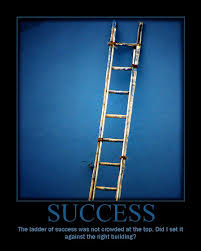
The end of the road: S to Z
Tuesday, November 9, 2010
My A to Z guide to today's best "success words": L to R
M is for Meatball Sundae: “Gotta get me some of that Social Networking. Blogs, e-mails campaigns, facebook updates, twitter posts, Google AdWords…”
STOP. As traditional business communications go away, the new digital tools seem irresistible. But they don’t work for everyone! Boring products (what I call “meatballs”) like Cheerios, Ford trucks, or beer only distract us with efforts to be socially relevant. When Budweiser spends $40 million developing “BudTV”—that’s a meatball sundae. Dressing up a boring business with bells and whistles no one wants and that lead to no new customers. The point is: avoid creating a meatball sundae. Use social media in business when it actually enhances your efforts.
N is for NOBS: Otherwise known as the new order business school. My rant about this points out that for most people, a traditional MBA is a waste of both time and money. The two biggest benefits--the selection process of getting in, and the social process of networking--could be accomplished without any classes at all. You can read more about this in my earlier post of April 2010 .
O is for Orangutan: I could have used the word 'monkey', but I already had an M listing, plus I love the way you spell Orangutan. Anyway, the primate is the best way to think about how people interact with websites. They're like monkeys in a psychology experiment, looking for the banana. Where's the banana, they ask? Keep this in mind if you are ever in the position of creating your own websites, for work or personal purposes. If your website offers a banana, people are going to click on it and respond. If they don't, they'll leave.
P is for Permission: Seth Godin's company, Yoyodyne Entertainment, is all about fun and games. But its mission is serious business. Godin and his colleagues are working to persuade some of the most powerful companies in the world to reinvent how they relate to their customers. His argument is as stark as it is radical: Advertising just doesn't work as well as it used to - in part because there's so much of it, in part because people have learned to ignore it, in part because the rise of the Net means that companies can go beyond it. "We are entering an era," Godin declares, "that's going to change the way almost everything is marketed to almost everybody."
The biggest problem with mass-market advertising, Godin says, is that it fights for people's attention by interrupting them. A 30-second spot interrupts a "Desperate Housewives" episode. A telemarketing call interrupts a family dinner. A print ad interrupts a blog. The interruption model is extremely effective when there's not an overflow of interruptions, but there's too much going on in our lives for us to enjoy being interrupted anymore.
The new model is built around permission. The challenge for marketers will be to persuade consumers to volunteer attention - to "raise their hands" to agree to learn more about a company and its products. Permission marketing turns strangers into friends and friends into loyal customers," he says. "It's not just about entertainment - it's about education."
Q is for Quitting: Sticking things out is overrated, particularly if you stick out the wrong things. In fact, I think you'd be much better off quitting most of what you do. The old saying is wrong--winners do quit, and quitters do win.
Every new project (or job, or hobby, or company) starts out exciting and fun. Then it gets harder and less fun, until it hits a low point-really hard, and not much fun at all. And then you find yourself asking if the goal is even worth the hassle. Maybe you're in a Dip--a temporary setback that will get better if you keep pushing. But maybe it's really a Dead End, which will never get better, no matter how hard you try.
What really sets superstars apart from everyone else is the ability to escape dead ends quickly, while staying focused and motivated when it really counts.
Winners quit fast, quit often, and quit without guilt-until they commit to beating the right Dip for the right reasons. They realize that the bigger the barrier, the bigger the reward for getting past it. If you fight the right fights, you'll get more than your fair share of profits, glory, and long-term security.
R is for Remarkable: For years, marketers have talked about the "4 Ps." Sound familiar? This has become the basic marketing checklist, a quick way to make sure that you've done your job. Nothing is guaranteed, of course, but it used to be that if you dotted your I’s and paid attention to your 4 Ps, then you were more likely than not to succeed.
No longer. It's time to add an exceptionally important new P to the list: Purple Cow. Weird? Let me explain.
While driving through France a few years ago, I was enchanted by the hundreds of storybook cows grazing in lovely pastures right next to the road. For dozens of kilometers, I gazed out the window, marveling at the beauty. Then, within a few minutes, I started ignoring the cows. The new cows were just like the old cows, and what was once amazing was now common. Worse than common: It was boring.
Cows, after you've seen them for a while, are boring. A Purple Cow, though: Now, that would really stand out. The essence of the Purple Cow -- the reason it would shine among a crowd of perfectly competent, even undeniably excellent cows -- is that it would be remarkable. Something remarkable is worth talking about, worth paying attention to. Boring stuff quickly becomes invisible.
The world is full of boring stuff -- brown cows -- which is why so few people pay attention. Being remarkable is the art of building things worth noticing. It is a plea for originality, for passion, guts, and daring. Not just because going through life with passion and guts beats the alternative (which it does), but also because it's the only way to be successful. Today, the one sure way to fail is to be boring. Your one chance for success is to be remarkable.
And that means you have to be a leader. You can't be remarkable by following someone else who's remarkable.
Tuesday, September 28, 2010
F - - -- K!
Monday, August 23, 2010
My A to Z guide to today's best "success words"
I love words. And new times sometimes demand new words because old words don't help us to see the world differently.So I've been collecting some important new words that I think are relevant to our brave new world, and it occurs to me that sometimes I may use these words as if you know what I'm talking about. So with thanks to Seth Godin and a few others, over the course of the next few months, I will share 26 of my favorite new words that in these new times maybe you need to adopt for yourself:
A is for Artist: Our world needs more artists. But to me, an artist is not defined as someone who just paints or writes, but a person who brings humanity to a problem, who changes someone else for the better, who does work that can't be written down in a manual or textbook. Art is about bringing creativity and insight to work, instead of choosing to be someone who just regurgitates what you've been forced to learn. Learn how to be an artist!
B is for Bootstrapper: A bootstrapper is someone who starts a business with no money and funds growth through growth. The internet has made bootstrapping much easier than ever, because the costs of creating and marketing remarkable things are cheaper than ever. It's really important not to act like you're well-funded if you're intent on bootstrapping (and vice versa). You can read the Bootstrapper's Bible for free.
C is for Choice: I didn't coin the term the Long Tail, but I wish I had. It describes a simple law: given a choice, people will choose. For business that means that digital commerce enables niches, and presents an opportunity to offer choice. Offering lots of choices--aggregating and enabling the long tail--accounts for the success of eBay, iTunes, Amazon, Craigslist, Google and even match.com.
D is for Darwin: Things evolve. But evolution is, well, evolving. While it used to take a hundred thousand years for significant changes to happen to our physical culture, the nature of information and a connected society means that 'everything' might change in just a few months. Ideas that spread will win--and people and companies that can "go Darwin" learn from their mistakes and will lead the rest of us.
E is for Edgecraft: Brainstorming doesn't always work so well, because most people are bad at it. They're bad at it because their lizard brains take over moments before a big idea is uttered. "Oh no!" it says, "I better not say that because if I do, it might be a BAD idea and then I'll have to defend it." And so brainstorming quickly becomes clever stalling and timewasting. Far better is to practice "edgecraft." Someone announces a new direction for a business ("we'll be really convenient, we'll offer our menu by fax,") and then the next person goes closer to that edge, topping it, ("we'll offer it by email!") and so on, each topping the other in any particular direction.
More in September...
Thursday, April 29, 2010
The coming melt-down in higher education
For 400 years, higher education in the US has been on a roll. From Harvard asking Galileo to be a guest professor in the 1600s to millions tuning in to watch a team of unpaid athletes play another team of unpaid athletes in some college sporting event, the amount of time and money and prestige in the college world has been climbing.I'm afraid that's about to crash and burn. Here's how I'm looking at it.
1. Most colleges are organized to give an average education to average students.
Pick up any college brochure or catalog. Delete the brand names and the map. Can you tell which school it is? While there are outliers (like St. Johns, Deep Springs or Full Sail) most schools aren't really outliers. They are mass marketers trying to attract the largest number of people they can accommodate.
Stop for a second and consider the impact of that choice. By emphasizing mass and sameness and rankings, colleges have changed their mission.
This works great in an industrial economy where we can't churn out standardized students fast enough and where the demand is huge because the premium earned by a college grad dwarfs the cost. But...
2. College has gotten expensive far faster than wages have gone up.
As a result, there are millions of people in very serious debt, student loan debt so big it might take decades to repay. At some point, word gets around. We won't get fooled again into believing that it always pays off for everyone.
3. The definition of 'best' is under siege.Why do colleges send millions (!) of undifferentiated pieces of junk mail to high school students now? We will waive the admission fee! We have a one page application! Apply! This is some of the most amateur and bland direct mail I've ever seen. Why do it?
Biggest reason: So the schools can reject more applicants. The more applicants they reject, the higher they rank in US News and other rankings. And thus the rush to game the rankings continues, which is a sign that the marketers in question (the colleges) are getting desperate for more than their fair share. Why bother making your education more useful if you can more easily make it appear to be more useful?
4. The correlation between a typical college degree and success is suspect.
College wasn't originally designed to merely be a continuation of high school (but with more binge drinking). In many places, though, that's what it has become. The data I'm seeing shows that a degree (from one of those famous schools, with or without a football team) doesn't translate into significantly better career opportunities, a better job or more happiness than a degree from a cheaper institution.
5. Accreditation isn't the solution, it's the problem.
A lot of these ills are the result of uniform accreditation programs that have pushed high-cost, low-reward policies on institutions and rewarded schools that churn out young wanna-be professors who have merely learned how to ace a multiple-choice test instead of experiences that turn out leaders and problem-solvers.
I think we're about to see significant cracks in old-school schools with mass market degrees.
Back before the digital revolution, access to information was an issue. The size of the library mattered. One reason to go to college was to get access. Today, that access is worth a lot less. The valuable things people take away from college are interactions with great minds (usually professors who actually teach and actually care) and non-class activities that shape them as people. The question I'd ask: is the money that mass-marketing colleges are spending on marketing themselves and scaling themselves well spent? Are they organizing for changing lives or for ranking high? Does NYU have to get so much bigger? Why?
The solutions are obvious... there are tons of ways to get a cheap, liberal education, one that exposes you to the world, permits you to have significant interactions with people who have new ideas and who matter, and to learn to make a difference (start here). Most of these ways, though, aren't heavily marketed nor do they involve going to a tradition-steeped two-hundred-year old institution with a wrestling team. Things like gap years, research internships and entrepreneurial or social ventures after high school are opening doors for students who are eager to discover the new.
The only people who haven't gotten the memo are anxious helicopter parents, mass marketing colleges and traditional employers. And all three will be waking up soon as they face new circumstances.
(with credit to Seth's Blog for the courage to publish this)
Wednesday, March 17, 2010
10 Reasons Why You're Going to Fail

2. You don’t have a plan. You need a vision, and you need to identify specific steps to make that vision become reality. That can includes a time management plan, a financial plan, or a strategic plan.
3, You’re waiting for everything to be perfect. Instead: test-drive it. Beta-test that new idea. You’ll fall into the trap of inaction if you think it has to be absolutely right from day one.
4. You’re not willing to work hard. Sorry, but everything worth pursuing in my life has involved discipline and perseverance.
5. It’ll outgrow you. Keep learning. Keep growing. But more importantly, build a team of people including leaders that can be who you’re not.
6. You’re banking on successes from the past. I’ve watched organizations hang on to a good idea for too long. Time passes. Momentum fades. It’s risky to let go of the past and jump on the next wave.
7. You’re unwilling to stop doing something else. Complexity is easy. Simplicity takes discipline. You can’t build a healthy marriage if you’re unwilling to give up dating other people.. Who/what do you need to stop dating?
8. You tend to do things alone. Anyone can hire from a resume. You need to find people you want to share life with. In the long run, great relationships will get you out of bed in the morning.
9. You won’t have the tough conversations. When breakdown happens (and it always does), someone needs to put on their big-boy pants and initiate the difficult conversation that leads to relational healing.
10. You’re afraid of failure. When fear consumes you, it will cause you to do stupid things. You’ll let negativity distract you. You’ll embrace the known, and grow comfortable with mediocrity. The more often you fail, though, the more often you’ll find success.
I think this is a really great list to work through when embarking on a new and challenging initiative. Agree/Disagree? Any thoughts on what may be missing from this list?
Saturday, February 6, 2010
Become Friends with your Enemy: TIME
There was a time when technology promised us more freedom – freedom to enjoy ourselves more, freedom from the drudgery of mundane and repetitive chores. In other words, we were promised more time. But we seem to be busier than ever before, frantically racing against the clock to do more and more, and technology hasn't really solved our problems. It only seems to make life more complicated.With the right approach, however, we can stop seeing time as our enemy and start to enjoy getting things done easily and effectively.
Time is flexible
This is rule number one – there is always time to do what you want to do. It’s all a matter of priorities. If something is really important to you, then you will find time to do it. When we say things like, ‘I don’t have time,’ what we’re really saying is ‘I don’t want to do it’ or ‘it’s too boring’ or ‘it’s too difficult.’ You can’t do everything, but you can do what matters.
So decide what’s really important
So what matters to you? Some stuff – a lot of stuff – just isn’t worth doing because it isn’t very important, so why waste your time on this? If you run through your week, you’ll probably find a lot of things that you thought you needed to do but which really weren’t important at all. Things that fall into this category can effectively be forgotten, so before spending time on something, ask if it really matters.
Do what you love
We always find time to do what we love. When you do what you love, you do it well – you make a good job of it and you are rewarded along the way. Some things you just love for no discernible reason, and doing these things is no chore. When you’re doing something that makes you feel good and gives you a sense of purpose and achievement, you are at your most effective.
It is a great tragedy that so many people do jobs they hate, seeing their work only as a way of earning money to enable them to really enjoy themselves at weekends or during vacations. Such people are truly wasting their time. Of course, we can’t just choose to change our job, bur it is possible to find ways of enjoying our work – there are good things about every job, and by focusing on these things, they will grow and the job will become more enjoyable.
Delegate whatever else you can
If something needs to be done, ask if you have to do it yourself. If you hate ironing or cleaning, and you have the means, you can just pay someone else to do it. There is a certain puritanical streak in many of us that says ‘we must do it all ourselves,’ but there is no reason why we should spend our time doing things we dislike when we can leverage our resources. If I pay to get my ironing done, I avoid a job I hate and I get the job done properly by someone who takes a fraction of the time.
Don’t try to race against the clock – it always wins
Some people are forever clock watching, always racing to finish before a certain time. Deadlines are fine and, indeed, necessary in many instances, but to be continually driven by the need to finish something by a certain time and get on to the next thing is exhausting, unsustainable and, in the end, not an effective way of operating. By focusing on how well you do something instead of how long it takes, you are likely to be more effective.
Focus on how much, not how often
If, like me, you have a busy and continually changing schedule, it can be hard to stick to a routine. Suppose I decide that I am going to go the gym every Monday, Wednesday and Saturday. For a week or two, I manage it, but then I need to go on a business trip or I have a lot of late meetings one week, so my schedule falls by the wayside.
To get around this, instead of the routine, I can focus on how many times I intend to go to the gym in, say, a month – twelve times, for example. Then, when I have a relatively light week, I can go more than three times, and when I have a busy week, maybe I can only go once. But in a whole month, I can almost certainly find time to go twelve times.
The benefit of this is that you are not continually feeling you must do a certain thing at a certain time, and racing against the clock. Of course, you need to record your progress – every time I go to the gym, I mark my calendar, and at the end of the month I see that I’ve done my twelve visits – easy!
Just do it
If you have to do something, and you intend to do it (neither is necessarily the case for any given task that comes your way), then my advice is – just get on with it. Procrastinating will only put off the inevitable. Of course, you sometimes need to choose the right time to do something, but don’t use this as an excuse to avoid doing something that really must be done.
And finally, some advice from H. Jackson Brown, Jr.:
Don't say you don't have enough time. You have exactly the same number of hours per day that were given to Helen Keller, Pasteur, Michaelangelo, Mother Teresa, Leonardo da Vinci, Thomas Jefferson, and Albert Einstein.
Tuesday, December 1, 2009
The Pause that Refreshes
Feeling overwhelmed by all your obligations? SO stop! It’s time to plug into something that YOU choose-something that can renew your batteries and refresh your interest in work AND life. Unlike the bobble-headed figures that nod “yes” at every touch, you DO get to declare “time out” and place yourself first.
How? Here are some ideas:
#1: Retreat in order to advance.
Take yourself away for at least two nights and three days to a place for a silent retreat. Yes-silence! Forbid yourself from using the phone, the television, or the internet. It’s time to listen instead to the voices in your head that have been trying to get your attention for ages. Write what you sense. Think on paper. And make resolutions that speak to what matters most.
#2: Experience something far a field from your profession.
Play chess or read a book that is NOT in your chosen line of work. Select something that piques your curiosity. The notion is to look for connections or ideas that might stimulate a new way of looking at your work or your life. Former elementary teacher Gail Wenos studied ventriloquism and discovered a new way to teach adults!
#3: Stretch yourself.
If you take an exercise class once a month, try going two more times. If you cook the same food the same way, alternate with a new cookbook. One guy I know saw himself as totally ill-equipped to ride anything that had less than four wheels. But he took motorcycle lessons and his sense of personal accomplishment grew.
#4: Practice your art every week.
Everyone has an art. It might be hammering nails or singing in the shower. It might be designing a garden or counseling a friend. But it uses a talent you’ve got and when this talent is engaged, you burn brightly. You leave the time refreshed. Put this down as a personal “no matter what” on your day timer.
#5: Throw out what weighs you down.
Read only those things that are meaningful to you. Can the clutter as well as the people who are the constant complainers and gripers. Ditch the weight of unnecessary purchases and their financial burden. Give clothes you haven’t worn in over a year to Goodwill . Remember, every ounce counts.
Saturday, November 14, 2009
How to Become Smarter
Intelligence is your ability to learn, reason, understand and master many subjects. It’s your aptitude in grasping truths, relationships, facts and meanings.Knowing a great deal is not the same as being intelligent; intelligence is not information “alone,” but also judgment, the manner in which information is collected and used. -Dr. Carl SaganHere are five ways to increase your intelligence by showing you how to enhance your capacity for learning, reasoning, understanding and mastery.
5 Ways to Become More Intelligent
- Read Often
It sounds so obvious, but...do you REALLY do it? Do you realize that through reading you can learn in a few hours what took someone else decades to learn? Reading not only informs, but it also increases your capacity for learning, thereby increasing your intelligence.
Although knowledge is not the summation of intelligence, it is the foundation of intelligence, so it’s crucial that we cultivate the joy of reading.
It’s an amazing thing, people who become successful write down how they did it, and then sell that information for a few dollars. For a few dollars and a few hours you can literally pick someone’s brain; you can buy a piece of their intelligence.
Reading gives you insight into great minds and sharpens your intellect. This allows you the ability to make greater logical connections because reading gives you more pieces of life’s puzzle. By reading from a multiplicity of sources, you gain the wisdom of many.
Reading (blogs like this one) is a great way to increase your intelligence. Remember, readers are leaders, and leaders are usually intelligent. - Teach Others
“Those that understand, teach.”- Aristotle
Teaching increases your capacity for reasoning, a critical aspect of intelligence.
Anyone who’s ever successfully taught anything realizes that teaching increases your capacity to reason. When you teach, you’re often required to view what you’re teaching from a variety of perspectives.“I've always felt that a person's intelligence is directly reflected by the number of conflicting points of view he can entertain simultaneously on the same topic.”-Abigail Adams
When you teach, it’s often essential that you question what you believe in order to deal with objections and oppositions that are sure to arise. Teaching is often more beneficial to the teacher than the student. - Get Into Action
Action increases your capacity to understand a subject. As the old proverb goes, “In all thy getting, get understanding.”
You can have information, and you can teach what you know, but you will never fully understand a subject until you put it into practice. If you want to significantly increase your intelligence related to cooking, don’t just watch the Food Network, and don’t just tell someone how to cook; you must master cooking yourself by trying, failing, and perfecting the act of cooking.
You will always understand things better when you do them yourself. Knowledge gives you the pieces of the puzzle; understanding helps you put the puzzle together.“A truly good book teaches me better than to read it. I must soon lay it down, and commence living on its hint. What I began by reading, I must finish by acting.”-Henry David Thoreau
- Master One Subject
Mastery is a sign of intelligence. Mastery comes from focusing on one subject until you fully understand it. If you can fully understand one subject, it will help you to better understand other subjects. In other words, mastery will increase your aptitude for grasping truths. If you can master playing the piano, you will better understand music in general.
Additionally, if you can master any subject, you will understand what it takes to succeed. - Bonus: Watch More Television
You probably didn’t see this one coming.
By watching more television, you can become more “well-rounded.” Of course I’m not referring to watching more of the The Simpsons, I’m talking about watching television shows that offer an educational message such as political shows or shows on The Discovery Channel or The History Channel. These shows can increase your capacity for learning, reasoning, and understanding as long as you don't choose educational shows that also stress you out.
Do you agree?
Wednesday, August 12, 2009
6 tips to rock your career
There are millions of brilliant people pursuing aggressive careers who have their sights set on great achievement. While their efforts are surely nothing short of genius, many lack the soft skills that could really put them over the top. These are the qualities that make good people great. Practical and time tested, mastering the following fundamentals will make if difficult for success to elude you.
1. Out of Box Thinking
Many dislike this term but the concept works. All it requires is thinking about problems through a different set of eyes, or different dimension. Sit back and try to solve the problem from the eyes of a 6 year old, turn things upside down, and absolutely challenge the norm. Go outside and sit in a subway station (or somewhere you generally don't sit to work) and think about why other solutions have not worked. What has worked?
Remember the best ideas come from people who are hands-on with their work. When everyone thinks and recommends a lackluster approach, lackluster results will follow. Change your surroundings, change your views, change your thought process and come up with a killer idea!
2. Taking Ownership
When no one is willing to own it, be the first to grab the opportunity. A process involving various stakeholders normally loses momentum and vision suffers. A process with a good leader, input from others, and true direction, has a much better chance of success. Be the person that jumps in and takes on a new project (just don't over-commit). An ability to own a task and work towards success is a skill which gives long lasting returns.
3. Eagerness to Learn
After a certain period, a job becomes monotonous and people become bored and eventually even lazy. They lose all the zeal to learn new things and although they won't admit this, their actions would make you believe they have thrown in the towel and are satisfied with a status quo life and career. If you really want to move ahead, don't get into this rut. Don't tune out.
Always remain eager to learn; you never know what knowledge or capability will push you up in your career. Remember, you need an open mindset and positive attitude to approach work. If you are constantly learning, it will be tough to be or appear to be interested in mediocrity.
4. Willingness to Help
Much of life is give and take. Work is no exception. If you are the person that is constantly stepping out of your comfort zone in order to help others, people (most) will return the favor when you ask. That's the key though, you have to be willing to help someone and not too proud to ask them for help when you need it.
5. Solution Seeking Mindset
People love to talk about problems. However, when you ask for their solutions, they aren't willing to go on record with sweeping changes. The majority of employees lack an attitude to solve issues and prefer to keep them burning. A positive mindset can send the right vibe and give you a lot of attention. Don't avoid complainers, listen to them just long enough to hear the problem, then try to come up with a solution.
6. Humility
Arrogance never attracts more people than humility. When you know your work and are humble about it, there is no reason that you would not be appreciated. Humility needs to be pitched with much care lest people take undue advantage of you. Strike the right balance and you will see its real magic.
It is a jungle out there.You not only need to survive but flourish too. Develop a killer attitude for success and no one will stop you.
Friday, May 15, 2009
Gone fishin'
Saturday, April 25, 2009
Gen X and Y appear to have an image problem.
According to a recent survey by JobFox, recruiters aren't too keen on Gen X or Yers. Only 20 percent said they were "generally great performers" as compared to 63 percent who said baby boomers (age 43-62) were great performers.
Ouch.
It gets worse. According to press materials, Gen Y (people under age 28) was also classified as 'generally poor performers' by the largest number of recruiters polled. Thirty percent of recruiters classified them as poor performers, followed only by 22 percent of recruiters who classified seniors as poor performers..
Double ouch.
But JobFox's CEO Rob McGovern thinks that managers and recruiters are missing the boat. Managers, he says, must "learn new ways to incorporate Gen X and Y views into the workforce."
OK, I agree. Managers and recruiters always need to be looking at how they can use an individual's strengths to help a company and boost the bottom line.
But I think it's more than that. I think both Gen X and Yers need to be better at their own personal p.r.. I think that if they wait around to get the respect they believe they deserve, they may find themselves waiting a long time. Because whether they deserve the slacker reputation or not, the problem is that it exists.
Believe it or not, however, you are being handed a golden opportunity to turn things around as the economy takes a nosedive. How? Let us count the ways:
1. Staying sane. Gen X and Y have lived a life of upheaval. They've grown up with AIDS, 9/11 and Britney not wearing any panties, so they don't get rattled easily. Right now the older folks in the workplace are pretty well freaking and stressing about everything from how to make their house payment to watching their 401(k) tank. If today's new workers demonstrate that -- while they understand the seriousness of the issues right now -- they are still upbeat and positive about life, it could have an enormous impact. Inspiring others to keep it all in perspective can demonstrate real leadership, and that's just the kind of reputation they need to develop.
2. Save others time. No one is more crazed these days that workers trying to balance the demands of their private and professional lives. But GenYers have grown up juggling, and have found technology enhances their lives. Young workers are in a great position to help other workers find ways to use technology to make their lives better. There's no way that anyone would be called a slacker for helping give someone more time with their kids or do their job better. Just be careful: You don't want your help to come off as smug or arrogant. Read Chris Brogan's post to make sure you do it right.
3. Provide the global view. The world has been delivered to GenY through television and computers since they were old enough to use a sippy cup. They have friends working in Darfur, they listen to bands from Japan and think nothing of IMing contacts in Istanbul or India. If they can keep their workplace informed on how events in Cambodia or Russia or Brazil may be impacting their business and bottom line, it could be enormously valuable. And let's face it -- those that contribute to the bottom line are seen as valuable -- and top performers.
While there are plenty of people telling managers that they need to treat GenYers better and learn to appreciate them, I think that GenYers may have to do some of the heavy lifting. They shouldn't wait around for someone to discover their strengths -- they should find subtle, but very meaningful ways to change perceptions that will have a real impact on their career success.
What are some other ways young workers can improve their image?
Thursday, March 19, 2009
Is Your Definition of Success Making You Miserable?
Is your definition of success a fatal mistake?For some, success is defined in terms of the dollar amount on a paycheck. For others, it's the title on their business card. Others may define success in terms of the accolades and awards they have won.
But the problem with how people define success these days is that when they're forced to change it, they can't. Look at the businessmen who have committed suicide because they have lost fortunes. Consider the workers who are fired and then go back to work, armed with a gun.
Extreme cases, sure. Not everyone considers killing themselves or others when their livelihood is threatened. But it does point out that maybe we need to revisit our own definition of success.
Start by completing this definition: "Success to me is...."
After you complete this sentence, then review it and determine if you're on the path to achieving that success. If you were to lose your job or money tomorrow, would your definition of success still be valid? Or, would you consider yourself a failure?
I remember a job where I worked long, stressful hours and often labored for a boss who had mood swings like a freaking roller coaster. It made for a tense situation, to say the least. One day I was talking to a co-worker and the exhaustion was overwhelming. I felt so dissatisfied, frustrated and even angry. Then it hit me: If I died that day, I didn't want the only thing on my tombstone to be "Always met his deadlines."
Ugh, I remember thinking. I wanted my life to account for more than that. It wasn't until months later that I started making some real changes in my life, changes that I know made me much better able to balance my life and devote time and effort to more than my job.
Right now, times are tough and some of us are beginning to panic. But I think it's a golden opportunity to really think about what is important in your life, and weed out the things that don't really matter.
You are the one who must define what success is to you. One thing I know for sure: You are more than a job title, you are worth more than a number on a paycheck and you are more than an award to hang on your wall. Is the destination you have in mind worth the road you must travel? Only you can answer that.
So, how do you define success?
Sunday, February 22, 2009
Tick,tick,tick,tick, tick....
Sleep: 8 hoursExercise: 1 hour
Work: 8 hours
Eating: 2 hours (leisurely)
Hygiene: 1 hour
Travel: 1 hour (Commuting back and forth)
That would leave you a whole three hours for time with friends or family, shopping, preparing meals, chores, errands, sex, and of course homework. If you have a dentist appointment, or your talkative relative calls, or if American Idol has a two-hour special, you’re tapped out.
It’s a challenge to live a happy life if you aren’t giving enough attention to all of those categories, yet doing so is nearly impossible.
One time management strategy is to become independently wealthy, freeing up eight hours a day. But that option isn’t available to many of us. And apparently it isn’t all that fulfilling because most rich people continue to work full schedules.
Another strategy is to ignore the fact that you would be slowly killing yourself and decide to sleep and exercise less. That frees up several hours a day. The only downside is that you get fat and die.
A third time management path is to work less than you could, live economically, enjoy each day as it comes, and try not to think about living on cat food when you retire.
Which strategy have you picked?
Well I am here to say there is a better way!
Time management skills are especially important for chronically stressed New Yorkers, who often find themselves performing many different jobs during the course of a single day. These time management tips will help you increase your productivity and stay cool and collected.
1) Realize that time management is a myth.
No matter how organized we are, there are always only 24 hours in a day. Time doesn't change. All we can actually manage is ourselves and what we do with the time that we have.
2) Create goals.
Remember, the focus of time management is actually changing your behaviors, not changing time. A good place to start is by figuring our what the goal is for your day. Prioritize everything else around this. You should start each day with a time management session prioritizing the tasks for that day and setting your performance benchmark, using something like the chart below. Put your day's tasks in one of the boxes depending on if it is URGENT or NOT URGENT to get to today, and if it is IMPORTANT or NOT IMPORTANT to your long term goals. If you have 20 tasks for a given day, how many of them do you truly need to accomplish today?
3) It’s all about PLANNING!Think of this as an extension of time management tip #2. The objective is to change your behaviors over time to achieve whatever general goal you've set for yourself, such as increasing your productivity or decreasing your stress. So you need to not only set your specific goals, but allocate your effort to meet those goals. Write down how much time you will spend on your priorities each day, and track them over time to see whether or not you're accomplishing them, and what is derailing you.
4) Eliminate personal time-wasters.
For one week, for example, set a goal that you're not going to take personal phone calls while you're working. Or you’re not going to reply to text messages as soon as they come in. Or you’re not going to check e-mails every hour and stop to respond to them. We eat up a lot of unnecessary time during our day by interrupting our productivity with other distractions. Control the time you spend on such distractions and you’ll accomplish more during the day. For instance, reading and answering email can consume your whole day if you let it. Instead, set a limit of one hour a day for this task and stick to it.
5) Establish routines and stick to them as much as possible.
While crises will arise, you'll be much more productive if you can follow routines most of the time. Routines are time savers because they lessen the amount of time you need to decide what to do next.
6) Be sure your systems are organized.
Are you wasting a lot of time looking for things? Take the time to organize. Develop systems. Is your computer filing system slowing you down? Redo it, so it's organized to the point that you can quickly lay your hands on what you need. What other things can you organize?
7) Don't waste time waiting.
From getting stuck on the subway to doctors appointments, it's impossible to avoid waiting for someone or something. But you don't need to just sit there and twiddle your thumbs. Always take something to do with you, such as a report you need to read, a checkbook that needs to be balanced, or just a blank pad of paper that you can use to plan your day. Technology makes it easy to work wherever you are; your PDA and/or cell phone will help you stay connected.
You CAN be in control and accomplish what you want to accomplish - once you've come to grips with the time management myth and taken control of your time.
Which one(s) of these ideas would work for you? Are there any other time management ideas can you think of?
Friday, January 30, 2009
Obama has his Cabinet--do you?
As Barack Obama continues in his first days in office, he'll be surrounded by trusted advisers.Before he makes a decision, he's likely to consult members of his Cabinet. He'll probably ask their opinions on everything from foreign policy to domestic issues. In the end, of course, the final decision will be his. But he will make that decision based on input he's received from people he trusts and respects.
So, who is in your Cabinet?
You may think you don't need a trusted group of advisers. After all, you're not the president of the United States, and may believe that it's a luxury reserved for world leaders.
Not so. In fact, no one may need a Cabinet today more than someone trying to get ahead.
That's because times are tough. It's hard not to be pessimistic about the future, at least for the moment. But with a Cabinet in place, you not only can do a better job of keeping difficult times in perspective, but you can have in place people to advise you when times are bad -- and good.
Who should be in your Cabinet? Well, let's consider who Obama has chosen. Some descriptions that come to mind: Smart, savvy, experienced and diverse. His advisers are not shrinking violets -- and Obama has reportedly encouraged them to be true to themselves and offer their unbiased opinions.
That's exactly what you're aiming for with your Cabinet: Smart, savvy, experienced and diverse. Now, let's look at how you put a Cabinet together:
* Make a list. Think of those you've worked with in past and current positions, or others you've met through various professional or academic functions. For your Cabinet, it's best to steer away from personal friends and family members. You want people who are more concerned with what's best for you professionally, rather than just becoming emotional about what happens in your career.
* Don't rush. Putting together your Cabinet won't happen overnight. You need to carefully consider each person, develop a comfortable relationship with them, to be able to begin to access the strengths and experience they can offer. And, you need to be able to offer something in return -- this is supposed to be a relationship that is beneficial for them as well. Perhaps you'll be a Cabinet member for them or be able to offer valuable contacts or help when needed. If you don't think you can offer reciprocal benefits, you may need to consider someone else.
* Who has your back? In the working world it can often be tricky to know exactly who to trust. A person may say they have your best interests at heart, but actions speak otherwise. When looking for a Cabinet, think about who has covered for you at work without whining about it. Or, the person who gave you a heads up about a new project that you might like or the person at another company who alerted you to a great new job that was opening up. Your Cabinet members should be supportive of you, and show they have your best interests at heart.
* Be realistic. Your Cabinet isn't going to do your work for you. That's still your responsibility. They're in place to give you advice, to act as a sounding board and to give you their honest opinion whether you're doing the right thing or headed for disaster. Don't abuse their talents and don't take them for granted. Make sure you always offer something of value in return, and you and your Cabinet will go far in the coming years.
The time is now to begin managing your career. It can begin by building your own Cabinet or Board of Advisors. What are some other ideas or considerations for building a career Cabinet? Do you have any experiences to share about trying to build your own?
Monday, December 22, 2008
See you in January!
Wednesday, November 5, 2008
Choosing the frame that complements the picture.
Imagine that the US is preparing for an outbreak of an unusual disease, which is expected to kill 600 people. Two alternative medicines to combat the disease have been proposed.
Assume that the exact scientific estimates of the consequences of the medicines are as follows:
If treatment A is undertaken, 200 will be saved.
If treatment B is undertaken, there is a one-third probability that 600 people will be saved and a two-thirds probability that no people will be saved.
Which one of the two treatments would you prefer?
Kahneman and Tversky found that a substantial majority of people would choose treatment A.
Then they gave another group of people the assignment but with the following description of the (same) options:
If treatment A is undertaken, 400 people will die.
If treatment B is undertaken, there is a one-third probability that nobody will die and a two-thirds probability that 600 people will die.
They found that, in this case, a clear majority of respondents favored treatment B! But the treatments really are exactly the same in both cases…!? How come people’s preferences flip although they are confronted with the exact same set of choices (be it described slightly differently)?
It is due to what we call “framing effects”, and they greatly affect people’s preferences and decisions.
For instance, In the first case, treatment A is described in terms of the certainty of surviving (which people like), but in the second case it is described in terms of the certainty of dying (which people don’t like at all!). Therefore, people choose A when confronted with the first treatment description, while in the second case they favor B, although the treatments are the same in both situations.
This effect is quite omni-present. How you frame a problem or solution to someone (e.g. your boss) is going to influence substantially what option he is going to prefer. How the people who work for you frame a situation while presenting to you, is also going to determine what you will choose.
Did I frame this in a way that can be of help to you?
Friday, October 10, 2008
The Ultimate Productivity Habit
I was lecturing in one of my classes the other day and noticed that NO ONE was writing anything down. Now I realize that not everything I have to say is important, but the fact that no one was writing anything made me think about the lost art of writing.
I do believe if something is important enough to remember, it’s important enough to write down. This doesn’t just apply to class notes or random to-do tasks or events to put on your calendar. I write down everything: goals, ideas, what I spend money on and useful thinking points from books. The reason to write isn’t to keep records, but to be more aware.
Writing focuses your thinking. When you write something down, you aren’t just creating a paper record, you’re changing the way you think about it. Writing down a goal changes a whim into a conviction. Writing down your expenses changes excessive spending from a bad habit to a conscious choice. Writing down your idea turns a vague suggestion into a clearer concept.
Writing is like an upgrade to your thinking. In the normal flow of thought, you can’t edit typos and make adjustments. If you get distracted, it can be hard to return to your place. And since your short term memory is only about 5-9 items long, you can’t think over more complex ideas.
When you start writing things down, you have an upgraded level of thinking about them. Writing things down makes you more aware of opportunities and problems, like a temporary boost to your IQ.
What Should I Write Down?
Obviously you can’t write down everything. You can’t write down everything said in a conversation. Writing down everything you eat or everything you do can eat up a lot of time. Writing is valuable because it forces you to focus, so writing down everything would ruin the purpose.
You should write down anything you feel needs more clarity. If you need to get in touch with how you feel about something, write about it. One of the best exercises I ever did came from the Julia Cameron book "The Artist's Way" in which she suggests you wake up every morning and just write 3 handwritten pages of whatever comes to you mind. It does not need to be profound thoughts, just write and keep writing whatever is on your mind until 3 pages are filled. You will be surprised after awhile how this exercise will focus you on your concerns, and more importantly what you can do about them.
Trust me when I say that this exercise changed my life. No kidding.
If something is important and worth getting done, it is probably worth writing down. Ask yourself what things could use more focus in your life. Writing isn’t an instant cure that will immediately make you more productive. But it makes you far more aware of what needs to be done and how well you are doing it.
If there is a part of your life that is unknown, inconsistent or in poor shape, you should consider writing more down about it. Write down ideas and make records while you’re working on it, and spend time writing your thoughts when you’re taking a break. If you can keep writing for a few weeks, it can reveal solutions to problems you didn’t even realize you had before.
I suggest committing yourself to writing something down for at least a month. Writing isn’t a natural habit, we weren’t born with the skill and it’s one of the first pieces of technology we had developed. As a result, if you don’t commit to continuing it for a few weeks, you probably will return to relying only on your short-term memory. Thinking is good, but writing plus thinking is even better.
Friday, September 5, 2008
Monkey Business
The 5 monkeys were locked in a cage, after which a banana was hung from the ceiling with, fortunately for the monkeys (or so it seemed…), a ladder placed right underneath it.
Of course, immediately, one of the monkeys raced towards the ladder, intending to climb it and grab the banana. However, as soon as he started to climb, the researcher sprayed the climbing monkey with ice-cold water. In addition, however, he would also spray the other four monkeys…
When a second monkey tried to climb the ladder, the researcher again sprayed the monkey with ice-cold water, and applied the same treatment to its four fellow inmates; likewise for the third climber and the fourth one. They all learned their lesson about how things work: they were not going to climb the ladder again – banana or no banana.
But the experiment did not stop there. In order to watch what happened, the researcher replaced one of the old monkeys with a new one. As expected, the new monkey spotted the banana, thinking “why don’t these idiots go get it?!” and started climbing the ladder. Then, however, it got interesting: the other four monkeys, familiar with the cold-water treatment, ran towards the new guy – and beat him up. The new guy, blissfully unaware of the cold-water history, got the message: no climbing up the ladder in this cage – banana or no banana.
When the researcher replaced a second old monkey with a new one, the events repeated themselves – new monkey ran towards the ladder; other monkeys beat him up; new monkey does not attempt to climb again – with one notable detail: the first new monkey, who had never received the cold-water treatment himself (and didn’t even know anything about it), with equal vigor and enthusiasm, joined in the beating of the new guy on the block.When the researcher replaced a third monkey, the same thing happened; likewise for the fourth until, eventually, all the monkeys had been replaced and none of the ones in the cage had any experience or knowledge of the cold-water treatment.

Fianlly, a 5th new monkey was introduced into the cage. It ran toward the ladder only to get beaten up by the others. But ask yourself this: why would these all new monkeys beat each other up over the banana, when none of them ever experienced the cold water treatment? Probably like human because they learned: "that’s the way we do things around here”…
I got this story from a colleague. It reminded him – and me – of quite a few of the organizations we have seen. Over the years, all firms develop routines, habits and practices, which we call the firm’s “organizational culture”. As I am sure you know, these cultures can be remarkably different, in terms of what sort of behavior they value and what they don’t like to see, and what they punish. Always, these habits and conventions have been developed over the course of many years. Very often, nobody actually remembers why they were started in the first place... Quite possibly, the guy with the water hose has long gone.
Who do you want to be? The monkey that goes along, or the one who questions “the way we do things round here?” You may initially take a beating being an agent of change, but actually you might be doing something valuable for the organization. And there's a banana in it for you if you learn to question the status quo...
Monday, May 26, 2008
Taking a Short Break
This 2 minute diagram is meant to represent a person, possibly me with hair, stepping away from his keyboard. I am taking a break for a number of days and don’t expect to be back on this blog until late August or September. In the meantime feel free to comment on the historical entries posted here, or look for the debut of www.EdwardKurpis.com coming live in late June or July.
The last few weeks have been rather interesting ones for me workwise. It is an exciting time, but unfortunately I can’t explain why at the moment. There is a lot to be pondered, and so I find myself doing a lot of pacing up, forth, back and down:
This is why I need a break...and some new shoes. See you soon.